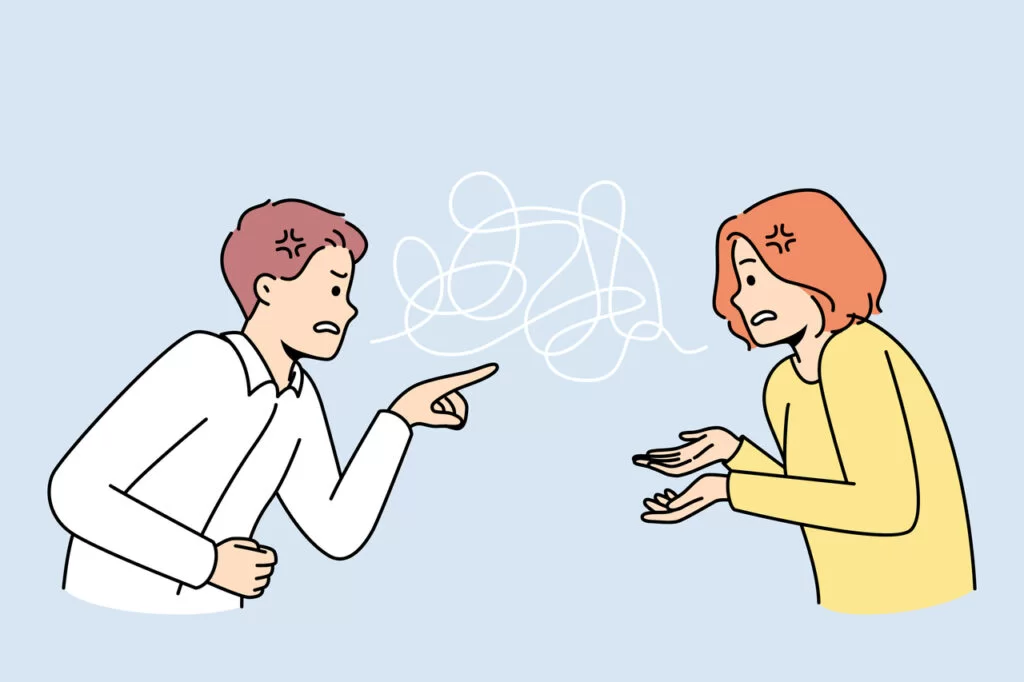
A healthy relationship should provide respect, trust, emotional safety and space for both people to be themselves. However, relationships can sometimes become unhealthy and leave one person feeling anxious, controlled, criticised or emotionally drained.
So, how can you recognise a toxic relationship?
A toxic relationship is not simply a relationship where couples disagree or have occasional arguments. Every relationship has difficult moments. What matters is whether there is a repeated pattern of behaviours that negatively affects your emotional wellbeing, self-esteem, boundaries or sense of safety.
In this article, we explore 10 common signs of a toxic relationship, including emotional manipulation, gaslighting, controlling behaviour, isolation and constant criticism.
10 Signs of a Toxic Relationship
1. Constant criticism and put-downs
One of the signs of a toxic relationship can be ongoing criticism.
Your partner may regularly criticise your appearance, personality, decisions, work, friendships or the way you do things. You may start to feel that nothing you do is ever good enough.
Over time, constant criticism can affect your self-esteem and confidence and make you question your own value.
A healthy relationship allows both people to make mistakes without being repeatedly put down or humiliated.
2. You are blamed for everything
In a healthy relationship, both partners can take responsibility for their own behaviour.
In a toxic relationship, however, you may find yourself being blamed for almost every problem.
You might hear things such as:
- “This is all your fault.”
- “You made me behave like this.”
- “If you had done what I asked, this wouldn't have happened.”
- “You always cause problems.”
You may eventually find yourself apologising simply to stop an argument, even when you do not believe you have done anything wrong.
Constant blame can gradually lead to guilt, self-doubt and low self-esteem.
3. Gaslighting and having your reality questioned
Gaslighting is a form of emotional manipulation where someone repeatedly questions or denies your memories, feelings or experiences.
You may hear:
- “That never happened.”
- “You're imagining things.”
- “You're too sensitive.”
- “You're overreacting.”
- “You can't remember anything correctly.”
Over time, you may begin to question your own memory, judgement and emotions.
You might start asking yourself:
“Am I the problem?”
“Did I really misunderstand what happened?”
“Can I trust my own judgement?”
If you regularly doubt your own perception because of another person's behaviour, this can be an important warning sign.
4. Your partner tries to control you
Control in a relationship can take many forms.
A controlling partner may want to know:
- where you are,
- who you are with,
- who you speak to,
- where you go,
- what you spend money on,
- what you wear,
- who you communicate with online,
- when you will return home.
Control can sometimes be presented as jealousy or concern.
For example:
“I'm only asking because I love you.”
But love and control are not the same thing.
A healthy relationship allows both people to maintain their independence, privacy and personal boundaries.
5. You are becoming isolated from family and friends
Another warning sign of a toxic relationship is isolation.
Your partner may repeatedly criticise your friends or family members, create arguments around your relationships with other people, or make you feel guilty for spending time without them.
Over time, you may gradually stop seeing people you care about.
You might find yourself thinking:
“It is easier not to see anyone than deal with the reaction afterwards.”
Isolation can make it much harder to recognise unhealthy relationship patterns and seek support.
6. Emotional manipulation and guilt
Emotional manipulation can make you feel responsible for another person's emotions and behaviour.
A partner may use:
- guilt,
- emotional pressure,
- jealousy,
- threats of leaving,
- emotional blackmail,
- blaming,
- deliberately withholding affection,
- or using your vulnerabilities against you.
You may feel that you constantly have to change your behaviour to keep your partner happy or prevent an argument.
Instead of feeling free to express your needs, you may become focused on keeping the peace.
7. Silent treatment is used as punishment
Everyone sometimes needs time to calm down after an argument.
There is a difference, however, between taking healthy space and deliberately using silence to punish or control someone.
If your partner repeatedly ignores you, withdraws affection or refuses to communicate until you apologise or give in, you may begin to feel that you have to do whatever is necessary to restore peace.
Over time, this can create anxiety and make you afraid to express your feelings or disagree.
8. Your boundaries are repeatedly ignored
Healthy relationships require healthy boundaries.
Your boundaries may involve:
- your personal space,
- your privacy,
- your body,
- your finances,
- your friendships,
- your time,
- your emotional needs,
- and your right to say no.
A toxic partner may repeatedly ignore or challenge these boundaries.
You may feel that your “no” does not matter or that you have to justify every decision you make.
Your boundaries are not selfish. They are an important part of a healthy relationship.
9. You no longer feel like yourself
One of the most significant signs of an unhealthy relationship may be the gradual loss of your sense of self.
You may notice that:
- you no longer do things you enjoy,
- you have stopped seeing friends,
- you constantly think about what your partner wants,
- you are afraid to express your opinions,
- your confidence has decreased,
- you frequently question yourself,
- you feel that you are “walking on eggshells”.
You may even think:
“I don't recognise myself anymore.”
A healthy relationship should allow you to grow as an individual rather than make you feel that you have to become someone else to keep the relationship going.
10. You feel anxious, afraid or emotionally unsafe
Perhaps the most important question is:
How do you usually feel in your relationship?
Do you feel respected, supported and emotionally safe?
Or do you regularly feel:
- anxious,
- tense,
- frightened,
- guilty,
- exhausted,
- confused,
- responsible for your partner's emotions?
If you constantly feel that you need to monitor what you say or do because you are afraid of your partner's reaction, this should not be ignored.
Your emotional response can be an important signal that something in the relationship is not working for you.
Toxic Relationship or Domestic Abuse?
The term “toxic relationship” is often used to describe a relationship that is emotionally harmful or unhealthy. However, it is important to recognise that some relationship behaviours may constitute domestic abuse.
Domestic abuse does not always involve physical violence. It can include emotional and psychological abuse, controlling or coercive behaviour, economic abuse, sexual abuse, threats, intimidation and isolation.
This distinction matters because if you are experiencing abuse, simply being told to “communicate better” or “leave the relationship” may not be enough.
Your safety should come first.
If you are experiencing domestic abuse in the UK and are in immediate danger, call 999. If you cannot speak safely on a mobile call, you can use the 55 option.
Why Is It So Difficult to Leave a Toxic Relationship?
People sometimes ask:
“If the relationship is making you unhappy, why don't you just leave?”
In reality, leaving a toxic relationship can be extremely complicated.
You may still love your partner. You may hope things will change. You may have children together, share a home or finances, or be worried about being alone.
You may also experience:
- fear,
- guilt,
- shame,
- financial dependence,
- low self-confidence,
- emotional attachment,
- uncertainty about the future,
- concerns about housing or children.
If controlling or abusive behaviour is present, leaving can also require careful planning.
You do not have to make a major decision immediately. Sometimes the first step is simply talking to someone you trust or speaking to a professional.
How Can Therapy Help After a Toxic Relationship?
Therapy can provide a confidential and non-judgemental space to explore what you have experienced.
It may help you to:
- rebuild your self-esteem,
- understand your emotional responses,
- recognise unhealthy relationship patterns,
- reconnect with your own needs,
- develop healthier boundaries,
- work through guilt and shame,
- rebuild trust in yourself,
- understand what you want from future relationships.
Therapy is not about a therapist telling you what you should do.
Instead, it can give you space to understand yourself, explore your options and make decisions that feel right for you.
Looking for a Polish Therapist in the UK?
If English is not your first language, discussing a difficult relationship in Polish may feel more natural and comfortable.
I offer therapy in Polish and English, supporting adults online across the UK and in person in Walsall.
As an Integrative Therapist, I work collaboratively and tailor therapy to your individual experiences, needs and goals.
You can start with a free 15-minute consultation to discuss what you are looking for and see whether therapy with me feels like the right fit.
Frequently Asked Questions About Toxic Relationships
What are the signs of a toxic relationship?
Common signs include constant criticism, blame, manipulation, gaslighting, controlling behaviour, isolation, ignored boundaries, emotional punishment, loss of self-esteem and feeling anxious or unsafe.
Is every argument a sign of a toxic relationship?
No. Arguments and disagreements can happen in healthy relationships. The important question is whether there is a repeated pattern of disrespect, control, manipulation or emotional harm.
What is gaslighting in a relationship?
Gaslighting is a form of manipulation where someone repeatedly denies or questions another person's memories, feelings or perception of events. It can cause a person to lose confidence in their own judgement.
Can a toxic partner change?
Change is possible when a person genuinely recognises their behaviour, accepts responsibility and consistently works towards changing it. Promises alone do not necessarily mean that meaningful change will happen.
Can you love someone and still have a toxic relationship?
Yes. Love and unhealthy relationship dynamics can exist at the same time. Caring about someone does not mean that you have to accept behaviour that harms you.
How can I rebuild my confidence after a toxic relationship?
Rebuilding confidence can involve reconnecting with your own needs and values, establishing boundaries, developing self-compassion and learning to trust your own decisions again. Therapy can provide support throughout this process.
You Don't Have to Go Through It Alone
Recognising that a relationship is unhealthy can be difficult, particularly when you have been living with these patterns for a long time.
You do not have to have everything figured out before asking for help.
Sometimes the first step is simply having a safe conversation with someone who will listen without judgement.
If you are looking for a Polish therapist in the UK, therapy in Polish, or an online therapist in the UK, I offer a confidential 15-minute free consultation.