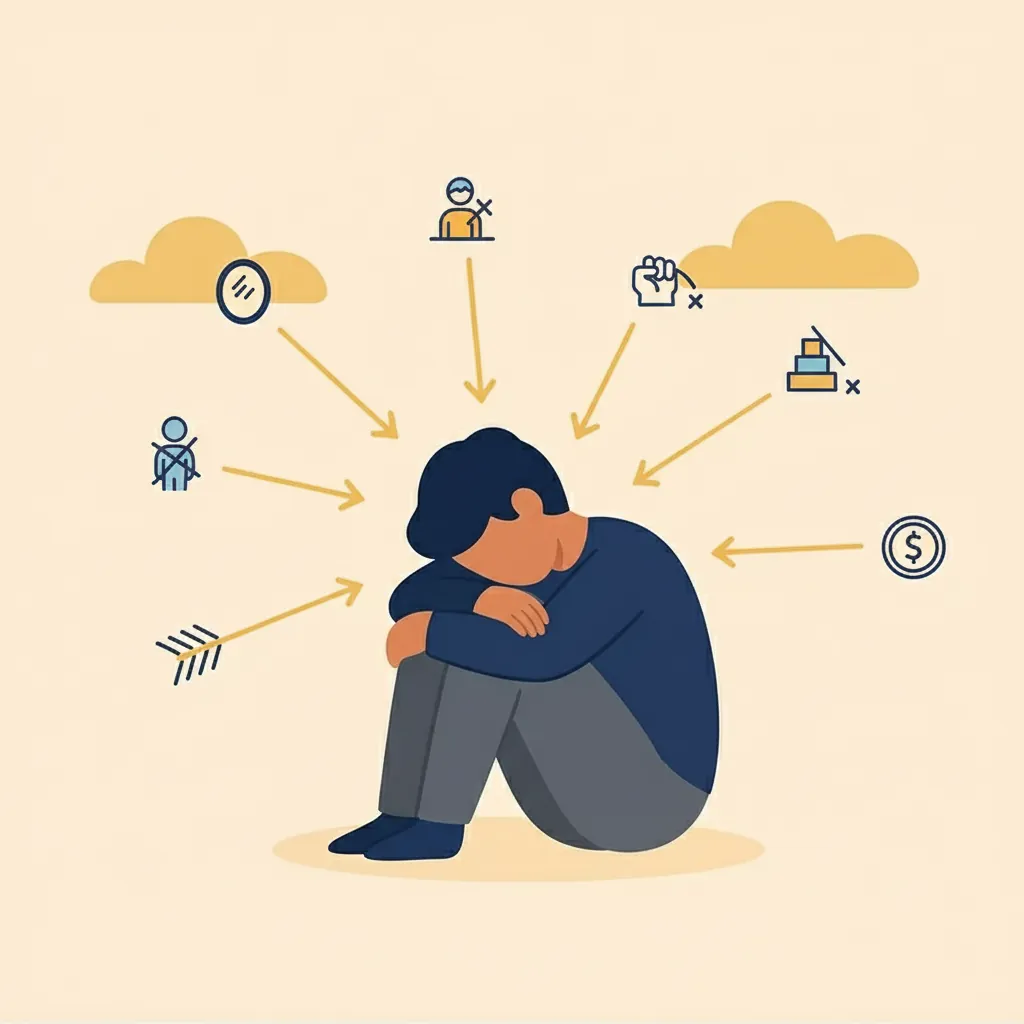
Have you ever felt that you are not good enough, that other people are more capable than you, or that you constantly need to prove your worth? Do you find it difficult to accept compliments, set boundaries or believe that you deserve happiness and healthy relationships?
Low self-esteem can affect almost every area of life, from relationships and work to emotional wellbeing and the way we see ourselves. You might appear confident on the outside while privately struggling with self-doubt, fear of rejection or a persistent feeling that you are somehow not enough.
The good news is that low self-esteem is not a permanent part of who you are. With greater self-understanding, emotional support and the right therapeutic approach, it is possible to develop a healthier relationship with yourself.
At Aga Detlaf Therapy, I offer a supportive, confidential and non-judgemental space where you can explore the experiences behind your difficulties, understand your emotional needs and begin building a stronger sense of self-worth.
What Is Low Self-Esteem?
Self-esteem refers to how we perceive and value ourselves. It influences how we think about our abilities, how we respond to mistakes, how we manage relationships and whether we feel deserving of love, respect and happiness.
When you have low self-esteem, you may find yourself focusing on your perceived weaknesses while overlooking your strengths and achievements.
You might struggle with thoughts such as:
- I am not good enough.
- Other people are better than me.
- I always get things wrong.
- I need to make everyone happy so they will like me.
- If someone is unhappy with me, I must have done something wrong.
- I do not deserve to be treated better.
- I am afraid people will discover that I am not good enough.
These thoughts can become so familiar that they start to feel like facts rather than beliefs that have developed through past experiences.
Low self-esteem is not always obvious. Some people become perfectionists, constantly striving to achieve more. Others avoid challenges, withdraw from relationships or find it difficult to express their opinions.
Understanding how low self-esteem affects you personally is an important first step towards change.
Where Does Low Self-Esteem Come From?
Low self-esteem rarely develops overnight. It can emerge gradually through childhood experiences, family relationships, difficult life events and messages we receive about ourselves and our worth.
There is no single explanation for low self-esteem. Often, several experiences contribute to the way we see ourselves today.
1. Childhood Experiences and Family Relationships
Our early relationships can influence how we learn to understand ourselves and other people.
Growing up with frequent criticism, unrealistic expectations, emotional neglect or a lack of encouragement may contribute to the belief that we are not good enough.
Perhaps you were praised mainly when you achieved something, behaved well or met other people's expectations. You may have learned that love and acceptance needed to be earned.
Alternatively, you might have grown up feeling that your emotions were dismissed, your opinions did not matter or your needs were less important than those of others.
As adults, these experiences can influence how we respond to criticism, whether we feel comfortable asking for help and how much reassurance we need from other people.
Not everyone who experiences a difficult childhood develops low self-esteem. However, exploring the messages you received growing up can help you understand where some of your current beliefs may have originated.
2. Criticism, Rejection and Bullying
Repeated criticism, bullying, humiliation or rejection can gradually affect our confidence and self-worth.
When someone repeatedly tells us that we are stupid, difficult, unattractive or incapable, we may eventually begin to believe those messages.
Sometimes, the most painful criticism is no longer coming from other people. It becomes an internal voice that continues long after the original experiences have ended.
You might notice yourself criticising your appearance, questioning your decisions or expecting others to judge you, even when there is little evidence that they are doing so.
Therapy can help you recognise where these beliefs came from and begin separating other people's treatment of you from your value as a person.
3. Toxic Relationships and Emotional Abuse
Our relationships can have a significant impact on how we feel about ourselves.
Being repeatedly criticised, controlled, manipulated, dismissed or made to feel responsible for another person's emotions can gradually undermine self-confidence.
In an unhealthy relationship, you might begin to question your own judgement, apologise excessively or feel that you must constantly work to keep the other person happy.
Over time, you may lose touch with your own needs, preferences and boundaries.
After leaving a difficult relationship, these patterns do not always disappear immediately. You may continue to doubt yourself or fear that future relationships will follow the same pattern.
Therapy can provide an opportunity to explore these experiences, rebuild trust in yourself and develop a clearer understanding of what respectful, emotionally healthy relationships look like.
4. Perfectionism and Fear of Failure
For some people, low self-esteem is closely connected to perfectionism.
You may feel that nothing you do is ever quite good enough. Even when you achieve something important, you quickly move on to the next goal without allowing yourself to feel satisfied.
Mistakes may feel unbearable because you interpret them as evidence that you are inadequate rather than recognising them as a normal part of being human.
You might avoid new opportunities because you are afraid of failing, disappointing others or being judged.
Behind perfectionism, there can sometimes be a fear that if you stop trying so hard, people will no longer value you.
Learning to accept imperfection does not mean giving up on your goals. It means recognising that your worth does not depend on getting everything right.
5. Comparing Yourself to Other People
Social media and everyday social pressures can make it easy to believe that everyone else is doing better than you.
You may compare your appearance, career, finances, relationships or achievements with carefully selected images of other people's lives.
When you focus on what you believe you lack, it can become difficult to appreciate your own progress and individual circumstances.
Comparison can also reinforce the idea that your worth depends on meeting external expectations.
Developing healthier self-esteem involves learning to recognise your own values, needs and achievements rather than constantly measuring yourself against other people.
6. Major Life Changes and Difficult Experiences
Low self-esteem can develop or become more noticeable following significant life changes.
Bereavement, separation, divorce, redundancy, illness, becoming a parent, caring for a loved one or moving to another country can affect our sense of identity and belonging.
When familiar roles and routines change, you might begin questioning who you are and what you have to offer.
Living abroad, for example, can bring additional challenges, including language barriers, cultural differences, loneliness and being separated from family or established support networks.
If your confidence has changed following a difficult experience, it does not necessarily mean that something is wrong with you. It may be a sign that you are struggling to adjust, process loss or find your place in unfamiliar circumstances.
Therapy can help you make sense of these changes and reconnect with a sense of identity that feels authentic to you.
10 Signs of Low Self-Esteem
Low self-esteem can affect people in different ways. You may recognise several of the following experiences in your own life.
- You constantly doubt yourself. You question your decisions and worry that you have made the wrong choice, even when you have good reasons for your decisions.
- You find it difficult to accept compliments. You dismiss positive feedback, feel uncomfortable when praised or assume people are simply being polite.
- You need other people's approval. You rely on reassurance to feel good about yourself and worry excessively about disappointing others.
- You struggle to say no. You agree to things you do not want to do because you are afraid of conflict, rejection or being seen as selfish.
- You compare yourself to others. You frequently feel less attractive, successful, capable or deserving than the people around you.
- You are highly self-critical. You focus on your mistakes, replay conversations and judge yourself more harshly than you would judge someone else.
- You tolerate unhealthy relationships. You may accept behaviour that hurts you because you fear being alone or believe you will not find a better relationship.
- You are afraid of failure. You avoid opportunities, new experiences or challenges because you worry about making mistakes or being judged.
- You put other people's needs before your own. You may feel responsible for everyone's happiness while neglecting your own emotional needs.
- You struggle to recognise your own worth. Even when things are going well, you may feel that you are not enough or that you do not deserve good things.
Recognising these patterns is not about labelling yourself or finding more reasons to criticise yourself. It is about developing awareness and understanding how you learned to relate to yourself in this way.
How Can Therapy Help with Low Self-Esteem?
If low self-esteem has been part of your life for many years, simply telling yourself to be more confident may not be enough.
You may already understand intellectually that you deserve respect and that nobody is perfect. Yet, emotionally, you might still feel inadequate, anxious or afraid of rejection.
Therapy offers an opportunity to explore these feelings in greater depth, understand the experiences behind them and gradually develop a different relationship with yourself.
1. Understanding the Roots of Low Self-Esteem
Therapy can help you explore when your negative beliefs about yourself began and how they developed.
You might start recognising connections between past experiences and your current reactions.
For example, if you were frequently criticised as a child, you may find it particularly difficult to receive feedback at work. If affection in your early relationships felt conditional, you might feel that you must constantly prove your worth to a partner.
Understanding these connections can help you approach yourself with greater compassion rather than continuing to blame yourself for how you feel.
2. Challenging Negative Beliefs About Yourself
Low self-esteem often involves deeply rooted beliefs such as "I am not good enough", "I am unlovable" or "I always disappoint people".
These beliefs can influence the way you interpret everyday situations.
A delayed reply to a message, for example, might lead you to assume that someone is upset with you or no longer wants to spend time with you.
In therapy, you can begin to examine these assumptions, consider alternative explanations and recognise the difference between a thought and a fact.
The aim is not to force yourself to think positively all the time. It is to develop a more balanced, realistic and compassionate view of yourself.
3. Developing Self-Compassion
Many people with low self-esteem are much kinder to others than they are to themselves.
You might offer understanding when a friend makes a mistake but respond to your own mistakes with shame, frustration or harsh criticism.
Therapy can help you explore this difference and develop a more supportive internal voice.
Self-compassion does not mean ignoring your mistakes or avoiding responsibility. It means recognising that you are human, that difficulties are part of life and that you can learn and grow without attacking yourself.
Over time, this can help reduce the impact of self-criticism and make it easier to cope with challenges.
4. Learning to Set Healthy Boundaries
When your self-worth depends heavily on other people's approval, saying no can feel frightening.
You might worry that setting a boundary will make someone angry, damage a relationship or lead to rejection.
Therapy can help you explore these fears and understand why your needs may feel less important than everyone else's.
You can gradually develop confidence in expressing your preferences, communicating your limits and recognising that healthy relationships allow space for both people's needs.
Setting boundaries is not about becoming selfish. It is about recognising that your wellbeing matters too.
5. Improving Relationships and Communication
Low self-esteem can influence the way you behave in relationships.
You might avoid expressing your feelings, become anxious when someone seems distant or repeatedly seek reassurance that you are loved.
You may also find yourself accepting unequal relationships because you are afraid of losing the connection.
Therapy can help you understand these patterns, communicate more openly and develop greater trust in your own perceptions.
As your self-esteem grows, you may find it easier to build relationships based on mutual respect, honesty and emotional safety.
6. Reconnecting with Your Identity and Personal Values
Sometimes, low self-esteem develops after years of adapting to other people's expectations.
You may have become so focused on being a good partner, parent, friend or employee that you have lost touch with what matters to you personally.
Therapy can give you space to explore your identity, interests, values and aspirations without feeling that you need to justify them to anyone.
You can begin asking yourself different questions:
What do I actually want?
What matters to me?
What makes me feel fulfilled?
What would I choose if I were less afraid of disappointing others?
Reconnecting with your own values can help you make decisions that reflect who you are rather than who you believe you should be.
Can You Improve Low Self-Esteem on Your Own?
There are things you can begin practising outside therapy that may support healthier self-esteem.
- Notice your inner critic. Pay attention to how you speak to yourself, particularly when you make a mistake or feel rejected.
- Question negative assumptions. Ask yourself whether your thoughts reflect the available evidence or an old fear.
- Practise saying no. Start with small situations where expressing your preference feels manageable.
- Recognise your achievements. Give yourself credit for everyday efforts, not only major accomplishments.
- Reduce unhelpful comparisons. Notice how certain social media accounts or situations affect the way you feel about yourself.
- Make time for your own needs. Allow yourself to rest, enjoy your interests and do things that matter to you.
- Spend time with supportive people. Healthy relationships can help you feel accepted without having to earn your place.
Try not to turn self-improvement into another reason to criticise yourself. You do not have to complete every step perfectly to make progress.
If low self-esteem is affecting your relationships, work, emotional wellbeing or ability to make decisions, professional support may help you explore the underlying difficulties.
How Long Does It Take to Improve Self-Esteem Through Therapy?
There is no fixed timeline for improving self-esteem.
Some people begin noticing changes after a relatively short period of therapy, while others need more time to explore experiences that have shaped their beliefs over many years.
Progress may involve recognising self-critical thoughts more quickly, feeling more comfortable expressing your needs, recovering more easily from setbacks or becoming less dependent on external approval.
Change is not always a straight line. You may experience periods of growth alongside moments when old feelings return, particularly during stressful situations or relationship difficulties.
The aim is not to eliminate every moment of self-doubt. It is to develop a more stable sense of self-worth that does not disappear whenever you make a mistake, experience rejection or face a challenge.
Your therapeutic journey should reflect your individual circumstances, needs and goals.
You Do Not Have to Prove That You Are Good Enough
Living with low self-esteem can be exhausting. You may spend years trying harder, pleasing others, avoiding mistakes or waiting for the moment when you finally feel confident enough.
Perhaps you have become so accustomed to doubting yourself that you no longer question the beliefs behind those feelings.
But what if you did not have to earn your worth through achievement, perfection or other people's approval?
You can acknowledge your mistakes without defining yourself by them. You can care about other people without neglecting your own needs. You can learn from difficult experiences without believing that they make you less deserving of love and respect.
Developing healthier self-esteem is not about becoming perfect or feeling confident every day. It is about learning to treat yourself with greater understanding, recognising your needs and allowing yourself to take up space in your own life.
You deserve to have a relationship with yourself that is built on respect rather than constant criticism.
Low Self-Esteem Therapy with Aga Detlaf in Walsall and Online Across the UK
If you struggle with low self-esteem, negative self-beliefs, people-pleasing or a persistent feeling of not being good enough, you do not have to work through these difficulties alone.
I am Aga Detlaf, an integrative therapist based in Walsall, West Midlands. I offer a warm, confidential and non-judgemental therapeutic space where you can explore your experiences, understand your emotional needs and work towards meaningful change.
My approach is tailored to you, recognising that your experiences, relationships and personal goals are unique.
I offer therapy in English and Polish, with online sessions available across the UK and in-person sessions in Walsall.
You do not need to know exactly where your low self-esteem comes from or what you want to change before starting therapy. Sometimes, the first step is simply having the opportunity to talk openly about how you feel.
Book a free 15-minute consultation to discuss what has been troubling you and explore whether working together might be right for you.
Visit www.agadetlaf.co.uk to find out more about my therapy services.
You do not need to become someone else to feel that you are enough. You can begin by understanding and accepting the person you already are.